Thursday, November 1, 2012

Teacher Samantha Goes to School


Having taught in public schools in America for four years, I wanted to see how the public schools in Taiwan compared.  I had heard about many of the differences from my students at the private “cram school” where I’ve been teaching for past year.  And of course, every teacher in America knows that students in many Asian countries are outperforming their American counterparts on standardized tests.  So when I got the opportunity to visit a local elementary school for a day, I sharpened my pencils and headed back to school.

I arrived at the front gate of De-Yin Elementary School and was escorted to Grade 3 Class 8 (or 308) by Huang Laoshi (Teacher Huang).  

Main entrance, De-Yin Elementary School


Class was already in session, and while the students were excited and distracted by the waiguo ren (foreigner) at the door, the teacher kept the lesson going.  The class was studying magnets, and the science teacher, Lee Laoshi, was leading while Teacher Huang had time to correct workbooks and plan lessons.  Immediately I was impressed.  A specialized science teacher in the elementary school?  Planning time for the classroom teacher?  Ahhhh, mere pipe dreams back in Milwaukee Public Schools.  

Teacher Lee explains magnets


After the 40-minute lesson, there was a 10-minute break before the next lesson began.  Apparently, here in Taiwan, there is no mandatory daily 90-minute reading block followed by a 75-minute math block for these young 8-year-old minds.  According to the weekly classroom schedule, EVERY lesson is followed by a 10-minute break.  All day.  Huh.  

Weekly Schedule for Class 308


The regularly-scheduled Social Studies lesson was postponed because the whole school had an earthquake drill.  I’ve participated in fire drills, tornado drills, and emergency lock-down drills, but never an earthquake drill.  At first, I wasn’t exactly clear on what we were practicing for.  The teachers put on hard hats and the students climbed under the desks while the principal or some other authority spoke over the loud speakers.  I thought maybe we were preparing for a missile attack from China.  I always think the worst.  

Duck and Cover

Earthquake!  (P.S. Only my head fit under my desk)


After a couple minutes huddled on the floor, some sort of signal told everyone to stand up, calmly line up at the door holding a book over their heads, and file outside in an orderly fashion.  Since I didn’t know what was really happening, I forgot to grab my camera in the confusion.  But once we got outside, the entire school sat quietly on the outdoor track and listened to the principal explain what would happen in the event of a real earthquake.  Then the fire department came over and sprayed the hose at a pretend fire while EMTs simulated first aid on a couple lucky student volunteers.  Overall, the drill was very thorough.  Nothing like the fire drills I’m used to.  And the students were so ORDERLY.  No kids were yelling or running around.  They just sat in their neat rows, girls in one group, boys in another, class by class, lined up from first grade all the way to sixth.  Truly impressive.

After all that excitement, you would think the rest of the morning would be shot, but no: the students came back in to the class, settled into their seats, and took out their books for the next lesson.  

Teacher Huang led a math lesson about using a scale to measure weight in grams and kilograms.  

Hard at work

Check out that whole-class engagement!!


At lunchtime, the students stayed in the classroom, and lunch was delivered directly to the class.  Each student bought his or her own bowls and utensils, and it was self-serve from the trays of food.  The school lunch consisted of rice, an egg dish, cooked spinach, pork and pea pods, french fries, soup, and an orange.  That’s GOT to be healthier than pizza, chicken nuggets, brownies, and chocolate milk, right?!?  

Lunchtime

Again, so orderly

No food fights

Pretty tasty school lunch.  Beats the heck outta "mock
chicken leg".... Why is it "mock"? So gross.


Lunch lasted 45 minutes, and the students took their time eating.  No wolfing down the food to get outside to recess 5 minutes sooner.  I got to spend some time talking with the students.  Some of them spoke English well enough to ask some questions and tell me about their family and friends.  More than anything, they were curious and eager to be friendly with me.  

Being kids


After lunch, it was nap time.  Yes, you read that correctly: nap time.  And this wasn’t some half-hearted attempted at rest.  The kids had pillows stored in the cabinets and put jackets over their heads to block out the light.  Rest time was 45 minutes, and even the teacher got to partake!  She passed the task of watching the class on to a student monitor, who dutifully took note of any classmates who were not resting.  

Ahhhh, peace and quiet


I took this opportunity to wander around the school.  I found that all the classes were napping, even the older kids.  Probably pretty good for digestion.  The halls were empty and quiet, giving no indication that far more than 1,000 young children were present. 

Hallway

A few nap-time resisters

De-Yin Elementary School.  And yes, this is an average-sized school.

Track

De-Yin Elementary School courtyard


Break-time ended and Mandarin class began.  The day’s lesson was Chinese calligraphy, so the students took out their special tools: paper, brushes, and ink.  Teacher Huang instructed the class on proper brush grip and showed a video demonstrating the strokes.  The students seemed to really enjoy this lesson, working with great concentration and precision.  

Preparing materials

"Direct instruction"

Calligraphy class


I had to leave before the school day ended, but on my bus ride back to work, I tried to reflect on what I had seen at De-Yin Elementary School and determine the major difference between the public schools in Taiwan and America.  I only had one day to observe, and I am sure there are many many layers of things I did not see.   But what is it?  What is it that makes the public school systems so different?

One thing is certain: the kids are just as sweet in Wugu as they are in Milwaukee!  

Thanks, Class 308!

Thursday, October 25, 2012

Return to Jiufen


I’ve been to many places on this island, but returning to the same area never fails to offer a new adventure.  I recently returned to the northern town of Jiufen with my cousins and their friends.  I had been once before on a day trip with some friends, but this trip was an overnight escapade.  

After an hour’s drive to the coast, we arrived at the base of Jilongshan, the tallest peak in the area.  While we waited for the whole group to arrive, we took in the sights of the Remains of the 13 Levels.  This haunting structure is what’s left of the old copper-smelting refinery.  When I first saw it, I thought (hoped?) it was an old prison.  It’s pretty creepy-looking. 

Spooky copper refinery leftovers


We hopped back in the car for a dizzying drive up through the mountain roads (and alleys) to find our hotel.  How people orient themselves to these twisting, turning, narrow “streets” is beyond me.  But we found our way (thanks to GPS), ate dinner, and settled in to the hotel.

Old Streets of Jiufen

Our cute little hotel


The next morning, I set my alarm for very-early-o’clock and went out to see the sunrise over the mountains.  Unfortunately, the sky was quite overcast, so mostly I just watched the night turn into day, without actually seeing the sun.  Ah, oh well.  The little town was so quiet and peaceful -- a big change from Taipei.

Good morning

Sun coming up over the hills


I went back to bed for a couple hours, then set off on a solo hike, while most of the rest of the group went shopping on the old streets.  I didn’t have a map to speak of, so I pretty much just wandered around for two hours, taking whichever street, alley, or path I thought looked interesting.  I quickly came upon a Junior High School at the top of a rise above town.  I discovered a trail that led to an old set of entry doors that were bolted shut, but the view from the top was beautiful.  And the set of steps leading from the school back down to the town seemed to go on forever.  Made the college-days climb up Bascom Hill seem like nothing. 

This shows MAYBE 1/10th of the stairs up to the school.
I couldn't fit them all in one photo...


I walked on, taking hundreds of pictures and enjoying the quiet solitude and clean air. 

Mountainside homes

Old house

Jilongshan in the background

Wandering around town

Jiufen

Front yard

Tunnel leading to Songde Park

I stopped here to listen to the monks chanting

Path

Almost made it to the top

Jiufen home


With the whole group together again, we visited the Gold Museum and Ecological Park in Jinguashi.  I had been there before on my previous trip, but sure enough, I discovered several different things I did not see the first time!

We went to the Crown Prince Chalet, which was built to accommodate the royal Japanese family in the 1920s.  From the grounds, we could see Keelung Mountain and Teapot Mountain, as well as a view of the town below, which was once the most crowded residential area in Taiwan.  

View from the grounds of the Crown Prince Chalet


Next we headed for the Gold Museum.  Since I had already taken the tour and touched the mega-sized gold bar, I opted for another “short” hike up to see the Jinguahsi Shinto Shrine.  Way up high on the slopes, having climbed maybe 7 million uneven stone steps, I looked out over the Ecological Park from the beautiful temple ruins. 

Jinguashi Shinto Shrine

Temple ruins

Windy


This trip was special because I got to travel with my cousin Cody, his wife Emily, and their son Austin.  It has been so incredible spending time with family way over here in Taiwan, especially family that I never get to spend time with back in the States.  But this trip was also special because it reminded me that no matter how many places I have visited in Taiwan over the last 14 months, there will always be something new and wonderful to discover when I return to Taiwan in the future!

Tuesday, October 16, 2012

Pingtung - Rukai Villages


In honor of 10/10 - the National Day of Taiwan - we had the day off!  I was lucky enough to be invited to Pingtung with my roommates to visit family.  Pingtung is the southernmost county in Taiwan, and home to the aboriginal tribe of the Rukai people.  My roommates, Abi and Muni, and their family are part of the Rukai tribe.

We took an overnight bus to reach Pingtung City and were taken to the home of Abi and Muni’s parents.  The family, and many others from the tribe, have relocated out of the mountains from remote Ali Village.  Ali was greatly damaged during Typhoon Morakot in 2009, leaving villagers displaced, homes destroyed, and roads inaccessible.

After a quick nap, we drove up into the mountains to the village of Shenshan, which translates to “God’s Mountain.”  And it was beautiful!  The drive up the narrow, winding mountain roads was made slightly more nerve-wracking by all the construction crews working on repairing the damaged sections washed out in the latest round of typhoons.

In Shenshan, the Rukai tribe was holding a multi-day sports competition between area villages.  We spent some time cheering on the Vedai team in men’s volleyball and at the track meet. 


Team Vedai (the red guys)

Kids' relay race

Adults' relay race -- check out the barefoot runners!

Me and my favorite cheerleader, Kiki :)

We walked around Shenshan, taking in the views and wandering the narrow village streets. 

Shenshan Village

Traditional home (with a nontraditional roof)

Festivities

Village road

Marriage mural

Wall

Shenshan


A quick car ride further up into the mountains, we arrived in Wutai (Vedai) village.  Wutai means “far place” - and for good reason.  It is remote.  Really far up there.  Like.... I didn’t even see a 7-Eleven. 

Wutai

Wutai

"Far Place" sounds about right


We stopped for lunch at the Wutai church, where the pastor invited us in and brewed some locally-grown coffee to share with us. 

Wutai Church

Wutai Church

The Pastor brews up some local coffee


Revived and buzzing from caffeine, we wandered off through the streets of Wutai.  The tribal culture is strong here, and most of the homes are decorated with tribal carvings and paintings.  Many of the walls and structures are built with the traditional stone-slab method.  The village was beautiful, peaceful, and so different from life in Taipei. 

Streets of Wutai

Stone-slab wall with carvings telling tribal stories

Wutai

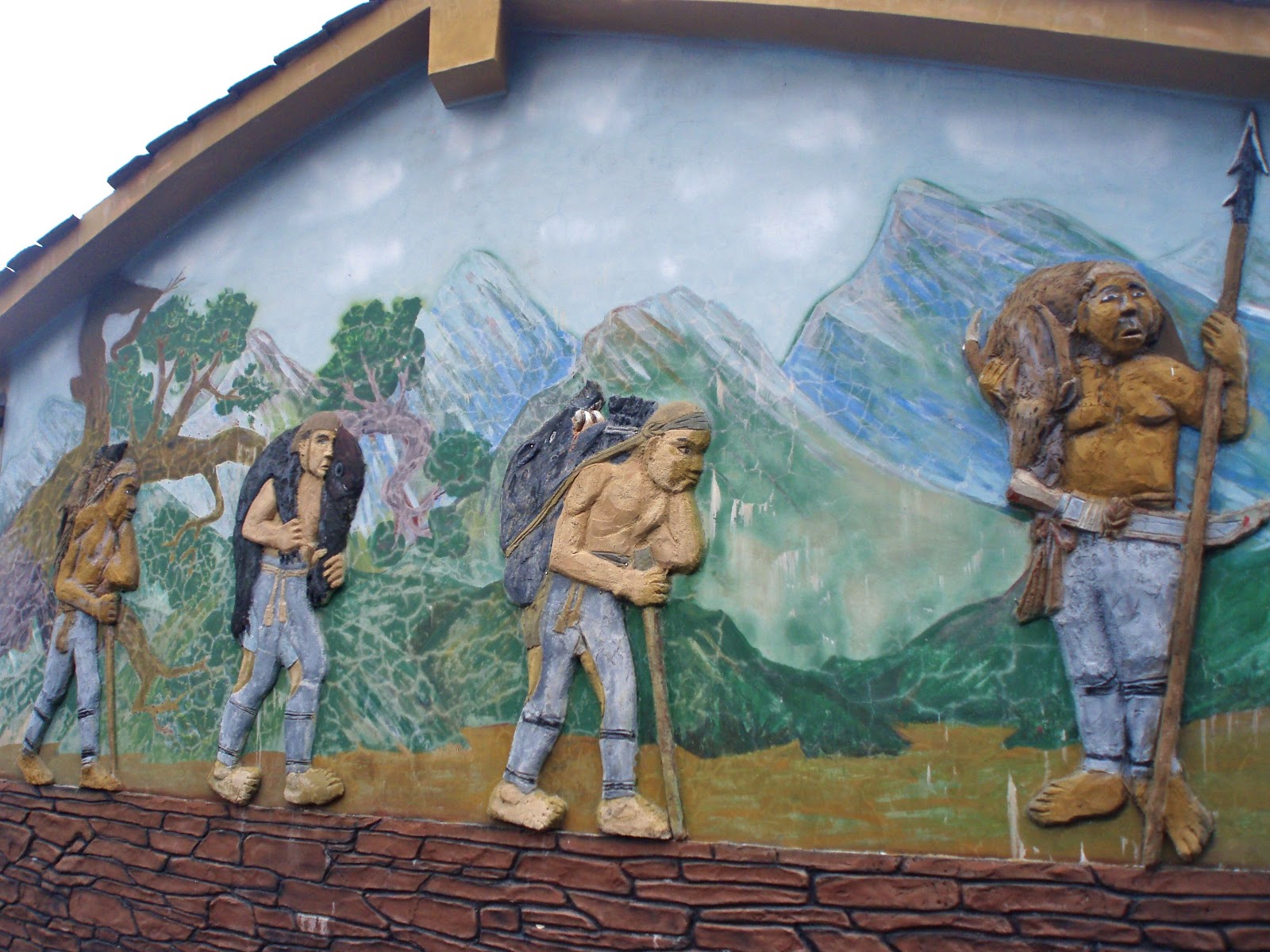
Hunters returning with their kill -- wild boar and bear

Remains of a traditional home


Our trip was very short -- we were in Pingtung for less than 24 hours -- but with my personal tour guides, I feel I got a real insiders experience.  And I learned one word from the Rukai language.  It means both “hello” and “goodbye” -- sa bao! 

Clockwise from top left: Muni, A Mei, Stacy, Abi, and Anna
My traveling partners in crime :)